What the 1981 Air Traffic Controller Firings Teach Leaders About Workforce Readiness
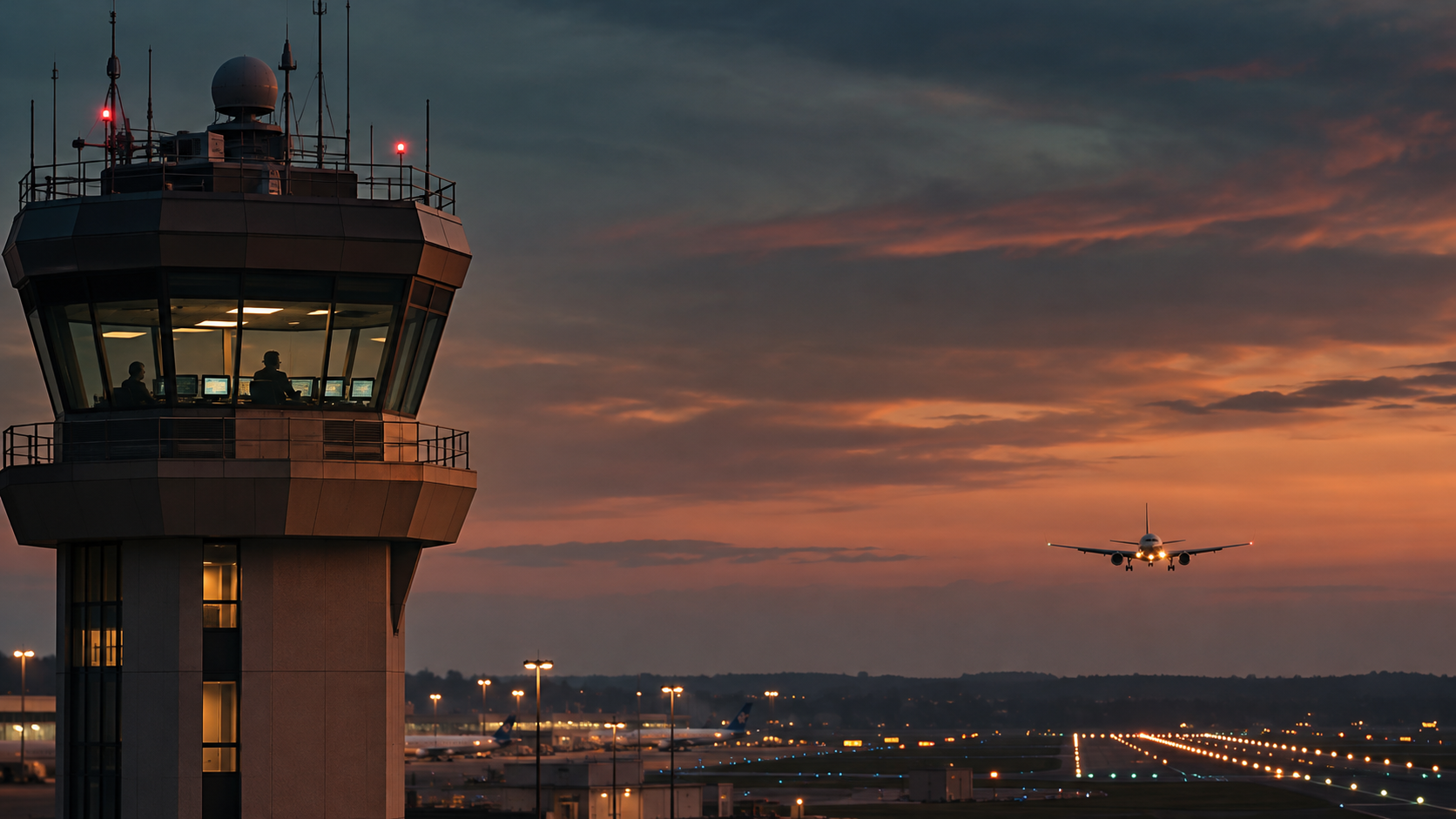
On the morning of August 3, 1981, roughly 12,300 members of the Professional Air Traffic Controllers Organization walked off the job, grounding about 35 percent of the nation's 14,200 daily commercial flights. President Ronald Reagan responded to the strike, illegal under federal law, with a 48-hour ultimatum to return to work or face permanent dismissal. When the deadline passed, the FAA fired approximately 11,400 controllers, later reinstating 440 on appeal. According to the FAA's own historical account, the firings reduced its workforce of fully qualified and developmental controllers from about 16,375 to about 4,200, a loss of roughly 74 percent.
Meanwhile, the immediate crisis centered on keeping aircraft separated and moving safely. The workforce had to be reconfigured. About 3,000 supervisors moved from overseeing the work to managing air traffic directly, roughly 800 military controllers were assigned to the FAA to help fill the gaps, and the controllers who remained on duty carried the rest, all while the agency accelerated hiring and training.
The FAA had a contingency plan for maintaining operations during a strike, but its subsequent workforce planning did not adequately anticipate the long-term development and succession requirements. A harder question emerged quietly behind the immediate crisis: What would it take to replace the experience that had just walked out and been forced to remain out?
The conditions preceding the strike are worth examining. Labor historian Joseph McCartin traces the conflict between controllers and the FAA back through years of disputes over staffing, equipment, working hours, and management practices. The agency had been confronting workforce pressures long before August 1981. What remains less clear is whether its approach to developing and sustaining that workforce changed when the crisis forced it to rebuild.
Rebuilding the Workforce
In the years that followed, the FAA hired thousands of replacements between 1982 and 1990, most of them in the first five years, and by 1987 it had reached the congressionally mandated staffing target of 15,000 controllers. On paper, the workforce was back. Yet the operating floor told a more complicated story.
You see, air traffic control is a craft learned in the seat. A new hire needs years of on-the-job training before becoming certified as a full-performance-level controller. Take the six air traffic control facilities serving northern New Jersey. In 1986, the Government Accountability Office found that the number of fully qualified controllers had fallen by 44 percent since the 1981 strike, even as air traffic activity had increased by more than 18 percent. Against this backdrop, controllers described working radar positions longer than policy allowed and carrying overtime that wore on their ability to perform.
A year later, GAO observed that the agency had fewer controllers handling considerably more traffic than before the strike. It asked the FAA to explain how its rebuilding efforts connected to the level of service it expected to provide.
What the record reveals is the distance between three measures of workforce readiness:
Headcount: The number of people available to do the work.
Capability: The knowledge, skill, and proficiency required to do it independently.
Continuity: The organization's ability to preserve and transfer that capability as people come and go.
Staffing does not a capability make.
It should be noted here that by 2002 about 850 former strikers had been rehired as a result of President Clinton 1993 lifting of the ban on rehiring the controllers fired in 1981. Their return restored some experienced personnel, but the numbers were small compared with the scale of the post-strike rebuilding. Even in looking at the rehire of the controllers that walked out 733 remained employed as of June 30, 2001, noting that these returning controllers were, on average, 54 years old.
And here we come to another problem that was already on the horizon: retirement.
The Resulting Crisis Came with Time and Warnings
The concentrated effort to rebuild the workforce solved one problem while creating the conditions for another. Thousands of controllers hired within a relatively short period would eventually reach retirement eligibility around the same time. The consequences of rebuilding without sufficient attention to succession planning were becoming visible in the workforce data, and the warnings were there.
In June 2002, the Government Accountability Office issued a straightforwardly ominous report titled FAA Needs to Better Prepare for Impending Wave of Controller Attrition. Leading up to the report in 2001, the average controller was 43 years old, approximately 2,500 were already eligible to retire, and GAO projected that around 68 percent of the workforce would become eligible within the following decade. A 2006 GAO testimony explicitly attributed the expected wave of departures to the concentrated hiring following the 1981 strike. It reported that the FAA hired an average of 2,655 controllers annually from 1982 through 1991.
The timing was critical because replacements could not be produced on demand. New controllers needed two to four years of on-the-job training to become fully certified, and up to five years at the most complex facilities. Yet the agency generally hired in response to vacancies, setting targets based on estimated attrition and reducing them when departures came in below forecasts.
The people closest to the operation saw the problem coming. Eight of the nine regional officials GAO interviewed wanted authority to hire above authorized staffing levels so replacements could be trained before experienced controllers retired. In May 2001, the Southwest Region formally requested 48 additional staff for precisely that purpose. In April 2002, headquarters denied the request, citing budgetary constraints and provisions of the controllers' union agreement.
The FAA had rebuilt a workforce, and in the process, it had built a retirement wave into its future.
Sit With This: How much institutional knowledge can an organization recover once the routines, relationships, and conditions in which it formed have changed?
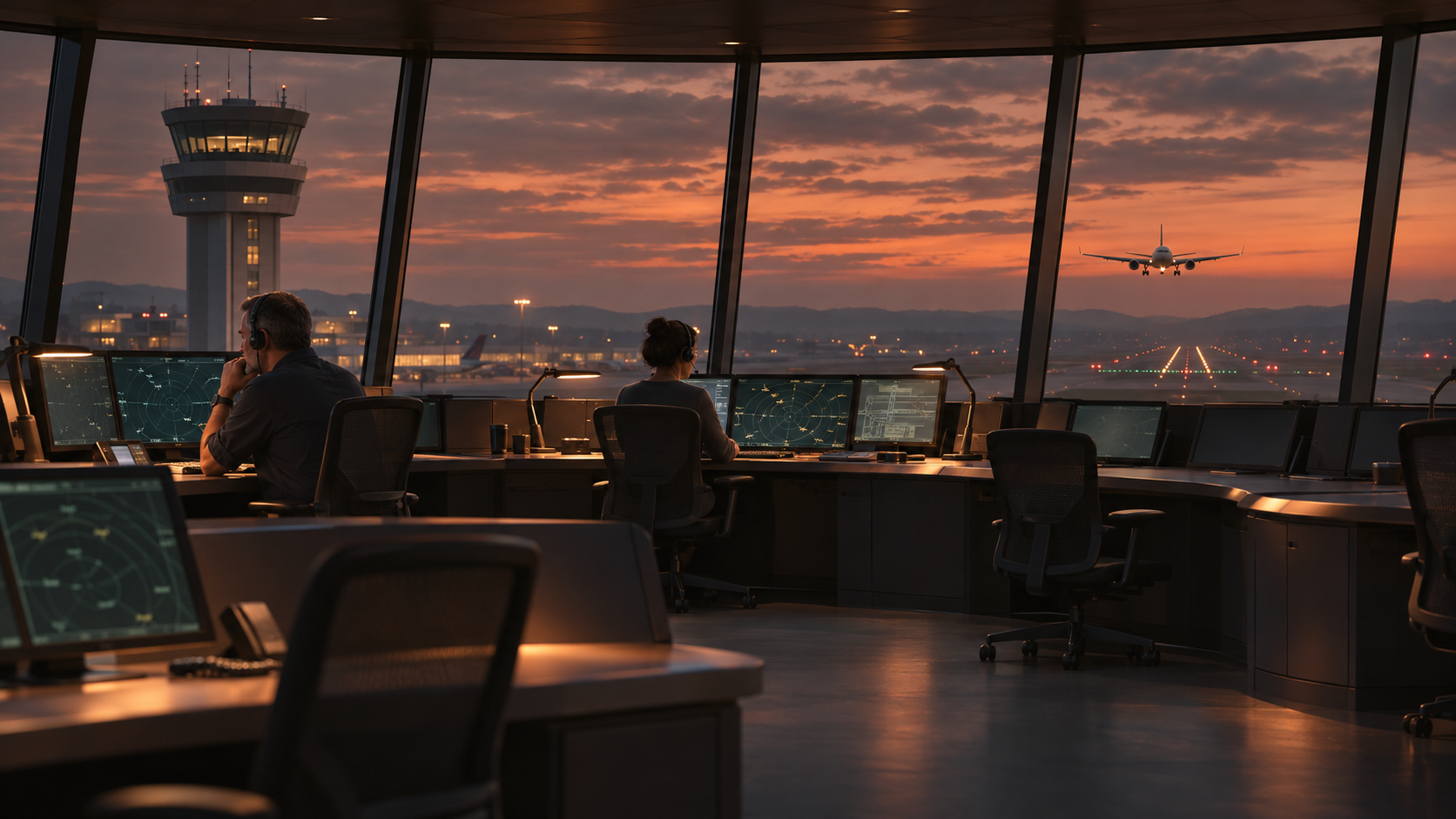
When workforce planning begins and ends with vacancies and authorized positions, capability becomes an afterthought.
The Same, but Different…Industries
Swap the control tower for a corporate org chart and the pattern becomes familiar. A hiring freeze protects the budget, a reduction in force lowers operating costs, and a restructuring consolidates responsibilities onto fewer desks. Each of those decisions can be the right call, and each one changes the conditions under which the remaining workforce operates. Output can hold steady for a quarter or two while the organization steadily loses its capacity to train people, develop successors, and absorb the next disruption.
And the FAA's present brings us back to the lesson. In December 2025, GAO reported that the agency ended fiscal 2025 with 13,164 controllers, about 6 percent fewer than in 2015. Meanwhile, the number of flights handled by the agency had increased by approximately 10 percent between fiscal years 2015 and 2024.
The causes are layered, including a sequestration-era hiring freeze, a 35-day funding lapse, and pandemic training disruptions, and GAO found that the path from application to full certification can take two to six years. The 1981 firings are one chapter in that history. The retirement wave that followed illustrates how workforce decisions can create vulnerabilities years after the immediate crisis has passed. Today's shortages have different contributing causes, but the challenge of developing qualified replacements before experienced employees leave remains familiar.
That brings us to the question at the center of this piece: who is accountable for the capability an organization will need after the immediate crisis has passed? It deserves as much attention as the decisions leaders make to stabilize the business, because workforce crisis management covers both the immediate response and the capacity an organization preserves for its recovery.
Five Considerations for Workforce Crisis Management
Name the capabilities at risk. Before the decision is final, map the skills, relationships, decision-making knowledge, and operational dependencies held by the people affected.
Assess the capacity of those who remain. Determine whether the remaining team can sustain operations, transfer knowledge, and develop new talent at the same time, and what gives when they cannot.
Hire to the development timeline. If a role takes three years to grow into, its succession plan starts three years before the seat opens. The FAA's own regional officials asked for exactly this authority.
Build recovery into the decision. Set the time, resources, and development pathways required to restore capability, and treat recruitment and operational readiness as separate milestones with separate dates.
Assign accountability beyond the crisis. Name who owns workforce readiness once the financial or operational targets have been met, and measure capability alongside headcount and payroll. The leaders who make crisis decisions are seldom the ones who inherit them, so ownership belongs in the plan itself, with a name and a measure attached.
The Workforce Remembers
The FAA's controller workforce has been shaped by successive generations of leadership, and its challenges today have many authors. The lesson of 1981 holds without assigning every later shortage to a single August. The consequences of a workforce decision continue long after the positions are filled or the budget balances, carried forward through the people who remain, the people who arrive, and the capabilities an organization must rebuild.
The workforce remembers decisions long after the leaders who made them have moved on. So when the immediate crisis is over and the headcount has been restored, who has made sure the organization is ready for what comes next?
Further Reading
National Transportation Safety Board. (1981). Air Traffic Control System (NTSB/SIR-81/07). Read report: https://www.ntsb.gov/safety/safety-studies/Pages/SIR8107.aspx
National Transportation Safety Board. (1983). Followup Study of the United States Air Traffic Control System (NTSB/SIR-83/01). Read report: https://www.ntsb.gov/safety/safety-studies/pages/sir8301.aspx
Federal Aviation Administration. (1998). Recovery of the FAA Air Traffic Control Specialist Workforce, 1981–1992 (DOT/FAA/AM-98/23). Edited by Dana Broach, Civil Aeromedical Institute. Read report: https://www.faa.gov/sites/faa.gov/files/data_research/research/med_humanfacs/oamtechreports/AM98-23.pdf
Federal Aviation Administration. (2008). FAA: A Historical Perspective, 1903–2008. Read report: https://www.faa.gov/sites/faa.gov/files/about/history/historical_perspective/historical_perspective_ch6.pdf
U.S. General Accounting Office. (1986, March). Conditions Within the Air Traffic Control Work Force at Six FAA Facilities. Read report: https://www.gao.gov/products/129192
U.S. General Accounting Office. (1986, October). FAA Staffing: The Air Traffic Control Work Force Opposes Rehiring Fired Controllers (GAO/RCED-87-32BR). Read report: https://www.gao.gov/products/rced-87-32br
U.S. General Accounting Office. (1987, July). FAA Air Traffic Controller Staffing and Related Issues (GAO/T-RCED-87-42). Read testimony: https://www.gao.gov/products/t-rced-87-42
U.S. General Accounting Office. (1987, November). FAA's Air Traffic Controller Staffing Standards (GAO/T-RCED-88-8). Read testimony: https://www.gao.gov/products/t-rced-88-8
U.S. General Accounting Office. (2002, June). Air Traffic Control: FAA Needs to Better Prepare for Impending Wave of Controller Attrition (GAO-02-591). Read report: https://www.gao.gov/products/gao-02-591
U.S. Government Accountability Office. (2006, June). Air Traffic Control Modernization: Status of the Current Program and Planning for the Next Generation Air Transportation System (GAO-06-653T). Read testimony: https://www.gao.gov/products/gao-06-653t
U.S. Government Accountability Office. (2025, December). Air Traffic Control Workforce: FAA Should Establish Goals and Better Assess Its Hiring Processes (GAO-26-107320). Read report: https://files.gao.gov/reports/GAO-26-107320/index.html
Additional Historical Perspectives
McCartin, Joseph A. (2011). Collision Course: Ronald Reagan, the Air Traffic Controllers, and the Strike That Changed America. Oxford University Press. View book: https://academic.oup.com/book/12083
Georgetown University Labor History Resource Project. PATCO: The Strike That Changed American Labor. Historical discussion featuring labor historian Joseph McCartin and former air traffic controller Ron Palmer. Explore resource: https://lhrp.georgetown.edu/collections/patco-the-strike-that-changed-american-labor/
Brown, Warren. (1981, August 3). The Air Controllers: At First, Frustration, Then Risky Defiance. The Washington Post. Read article: https://www.washingtonpost.com/archive/politics/1981/08/03/the-air-controllers-at-first-fr