
How to Recover From Career Burnout: A Structural Approach to Sustainable Work
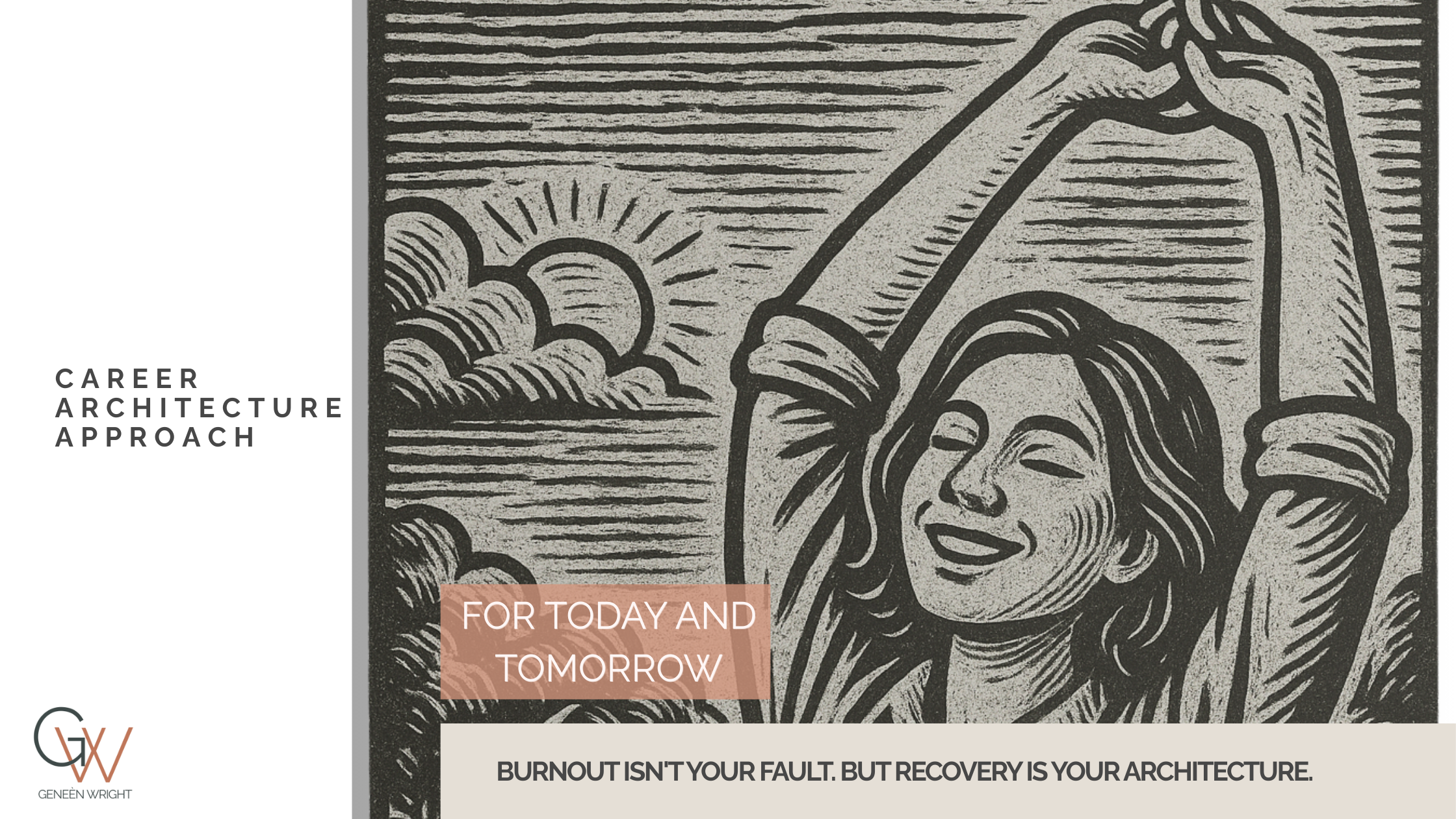
Why burnout isn't a personal failure and how Career Architecture helps you rebuild sustainable work conditions
In 1974, psychologist Herbert Freudenberger named “burnout” after watching committed professionals slowly unravel under conditions they were never built to withstand. Fifty years later, we’re still treating burnout as a personal failing instead of what it truly is: a structural mismatch between what work demands and what humans can sustainably provide.
If you’re burned out, you’re not the problem. The problem is the architecture of your work.
If you're burned out, you're not weak. You're not doing work wrong. You've been operating in conditions that were designed—or have evolved—to be unsustainable. And recovery isn't about pushing through or finding more grit. It's about rebuilding the architecture of how you work.
What Burnout Actually Is (And Why It's Not Your Fault)
Burnout isn't the same as stress or exhaustion. It has three distinct dimensions:
Exhaustion: Physical, emotional, and cognitive depletion
Cynicism: Detachment from your work, colleagues, or the purpose of what you're doing
Inefficacy: A sense that nothing you do matters or makes a difference
Here's what matters: burnout develops when there's chronic misalignment between six areas of work life—workload, control, reward, community, fairness, and values. Christina Maslach, whose research defined our understanding of burnout, found that the more misalignments you have, the higher your risk.
This is crucial because it tells you where to look. You're not burned out because you're not resilient enough. You're burned out because the conditions you're working in are systematically misaligned with what you need to do sustainable work.
The Career Architecture Approach to Burnout Recovery
Career Architecture treats your career like a building. When a building is damaged, you don't just paint over the cracks—you assess the foundation, identify structural damage, and rebuild with intention.
Burnout recovery follows the same logic. You need to:
Assess the damage (where the misalignments are)
Identify what's salvageable (what still works)
Rebuild with intention (create sustainable conditions)
Ready to Rebuild?
This is where Career Architecture becomes essential. The full recovery framework includes:
Step-by-step diagnostic tools to map your specific misalignments
Immediate stabilization tactics for each of the six work-life areas
Energy audit protocols to understand what's actually depleting you
Strengths realignment strategies to work from momentum, not compensation
Three exit/pivot/rebuild options with decision frameworks
The complete guide to burnout recovery: including worksheets, templates, and the full Career Architecture methodology is available to subscribers of Career Communiqué.
---