
New Manager? Here's How to Actually Lead.

Becoming a first-time manager is one of the most challenging career transitions professionals face. Yet 85% of new managers receive no formal leadership training, leaving them to navigate invisible expectations alone. Here's what companies don't tell you about the shift from individual contributor to leader—and how to actually prepare for it.
Kenneth was great at his job. The kind of great that makes senior leaders say, "Why can't everyone operate like him?" He hit every target, built airtight client relationships, and solved problems so quickly people started going straight to him. When the promotion came, it felt like a natural evolution. A reward. A long-overdue "finally."
He welcomed the new title, the bigger scope, even the slightly fancier laptop bag.
What he didn't bargain for were the three direct reports whose careers he was now responsible for shepherding.
Overnight, the job shifted. Instead of being the hero who fixed things, he was expected to grow other people into problem-solvers. Instead of managing tasks, he was managing tension, ambition, communication gaps, and the quiet undercurrent of "my manager shapes my future here."
Kenneth didn't suddenly lose his skills. But he did lose his scaffolding.
No one had taught him how to coach someone through a performance dip or hold difficult conversations without over-explaining. No one had shown him how to move from "I'll do it myself because I'm fast" to "I need to develop someone else because that's the job now."
The company celebrated his promotion but skipped the part where he needed new muscles, not just a new title. So he did what many first-time managers do—he overcompensated. He leaned harder on what he knew: excellence, speed, expertise. Meanwhile, his team needed clarity, feedback, psychological safety, and the sense that their manager wasn't silently drowning.
This is the story of thousands of new managers every year. The promotion is the reward. The preparation is the missing chapter.
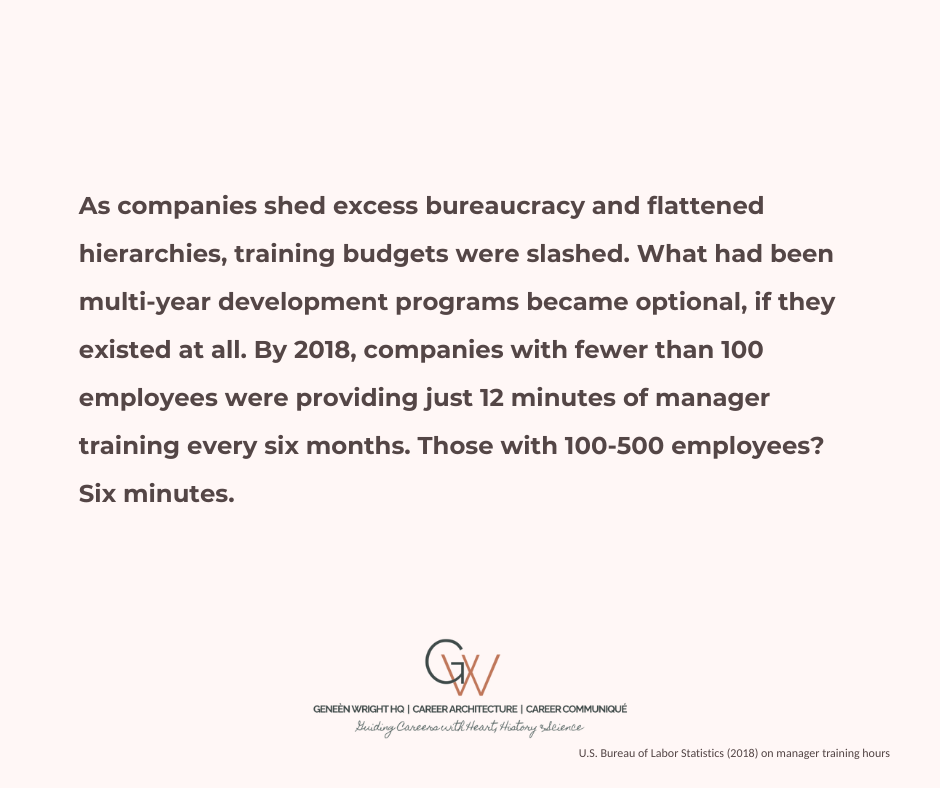
This is what I call the Career Architecture challenge, when organizational structures fail to build the scaffolding new leaders need.
The Shift No One Talks About: From Doer to Leader
New managers often enter leadership roles with minimal training and maximum expectations. It’s assumed that success in your role translates into the ability to lead, but they are two different skill sets.
You’re no longer just responsible for your performance. You’re now responsible for the clarity, confidence, and cohesion of your team.
Key Takeaways for New Managers
📊 According to DDI’s Global Leadership Forecast:
Only 28% of companies provide effective first-time manager training
Frontline managers influence up to 80% of employee engagement
The transition from doer to leader requires new skills, not just expertise
Clarity, feedback, and psychological safety are your new core competencies
What It Really Means to Manage
Whether you’re managing 1 person or 10, you're responsible for setting the tone, building trust, and aligning performance with purpose.
Your Role Is Clarity, Not Control
People don’t need you to be perfect, but they need you to be clear.
Set expectations early:
What are their top 3 priorities this quarter?
How does success look and feel on this team?
What’s your communication style, and how do you want to receive updates?
Career Tip: Write a 1-line success statement for each team member. Discuss and align with each direct report. Challenge them to follow up with when and how, for future alignment between you and them.
Continue taking steps from individual contributor to emerging leader, and subscribe to Career Communiqué for access to The Leadership Transition Toolkit.

Essential Skills for First-Time Managers
Upcoming Leadership Development Frameworks
How to Give Feedback Without Flinching
Managing Former Peers (Without Being Weird)
Leading in a Matrix: Managing Without Formal Authority
What to Do When You Inherit a Mess
Delegation Without Guilt
The New Manager’s First 90 Days (Checklist Inside)
Remember
Leadership isn’t about having all the answers.
It’s about being the person your team can trust to figure them out together.